Recent Post

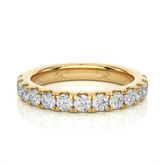
Exclusive jewelry sale featuring elegant designs at irresistible prices

Elegant hands showcasing delicate jewelry with timeless minimalist beauty

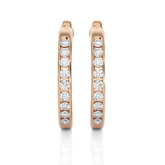
Elegant Green Diamond Drop Earrings Luxury Pink Diamond Collection

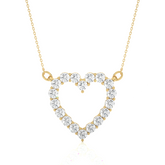
Elegant Heart Shaped Green Diamond Wedding Necklace Jewelry Collection

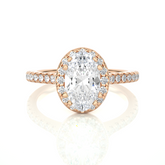
Elegant Green Diamond Ring New Launch Luxury Jewelry Collection

Elegant Blue Crystal Drop Earrings Luxury Jewelry Sale Collection
Leave a comment

Natural vs Lab-Grown Diamonds: Beauty, Value, and Origin Compared
While natural and lab-grown diamonds are chemically, physically, and optically identical, they differ significantly in their origin, rarity, and market value. Both are composed of pure carbon arranged in a cubic crystal structure, meaning they possess the same hardness (10 on the Mohs scale) and brilliance.
1. Origin and Formation
-
Natural Diamonds: Formed deep within the Earth’s mantle over 1 to 3 billion years. They are created under intense heat and pressure and brought to the surface through volcanic eruptions (kimberlite pipes).
-
Lab-Grown Diamonds: Created in a laboratory setting over weeks or months. Scientists use two primary methods:
-
HPHT (High Pressure High Temperature): Mimics the Earth's natural conditions using a press.
-
CVD (Chemical Vapor Deposition): Uses a carbon-rich gas (like methane) in a vacuum chamber to "grow" the diamond layer by layer on a seed crystal.
-
2. Purity and Grading
Both types are graded by the GIA (Gemological Institute of America) or IGI (International Gemological Institute) using the 4Cs: Cut, Color, Clarity, and Carat.
| Feature | Natural Diamond | Lab-Grown Diamond |
| Inclusions | May contain trace amounts of nitrogen or other minerals from the Earth. | Often have high clarity; CVD diamonds may have specific growth graining. |
| Identification | Requires specialized UV and spectroscopy equipment to distinguish from lab-grown. | Must be laser-inscribed with a serial number identifying it as "Lab Grown." |
| Hardness | 10 (Mohs Scale) | 10 (Mohs Scale) |
3. Value and Investment
This is the most significant practical difference for consumers:
-
Resale Value: Natural diamonds generally retain a portion of their value over time and have a robust secondary market. Lab-grown diamonds currently have very low to zero resale value because they can be mass-produced.
-
Price Point: Lab-grown diamonds are typically 60% to 85% less expensive than natural diamonds of the same quality. This allows for larger carats or higher clarity (such as VVS) at a lower budget.
4. Sustainability and Ethics
-
Natural: Mining has a significant environmental footprint but provides critical economic support and jobs to many developing nations (e.g., Botswana, Namibia).
Lab-Grown: Marketed as more eco-friendly; however, they require massive amounts of electricity to run the reactors. Their "green" status depends largely on whether the lab uses renewable energy.
💎 Final Conclusion: Natural vs Lab-Grown Diamond
👉 Both natural and lab-grown diamonds are real diamonds with the same beauty, shine, and durability. The main difference is how they are made and how they are valued.
✔️ Natural Diamond = Prestige & Rarity
- Formed over billions of years
- Rare and valuable
- Higher price
- Better for investment & luxury appeal
✔️ Lab-Grown Diamond = Smart & Affordable
- Created in weeks using technology
- Much more affordable
- Looks identical to natural
- Best for budget buyers & modern trends
💡 Simple Final Line
👉 If you want status and long-term value → choose Natural
👉 If you want beauty at a better price → choose Lab-Grown